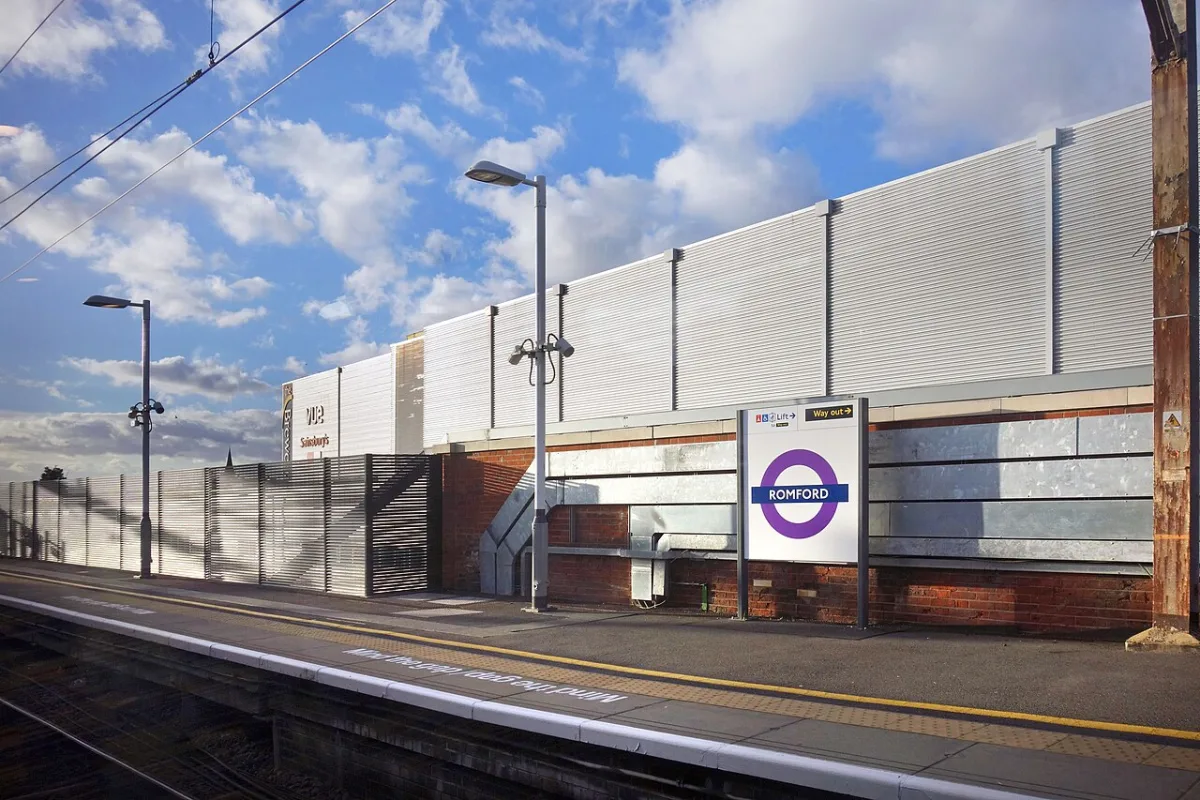

The Elizabeth line reaches Liverpool Street in 29 minutes, every 4 to 5 minutes at peak. 2026 fares and caps, the 18-minute fasts and the 00:55 last train.
Romford’s commute is built on one very good fact: the Elizabeth line runs through it. That puts the City 29 minutes from South Street without a change, drops a train onto the platform every four to five minutes in the morning peak, and carries on under the West End to Paddington. This page sets out the real times, the 2026 fares and caps, the twice-hourly fast trains most people forget about, and the last train home, with every figure linked to TfL’s own data or the National Rail timetable so you can check it.
The quick version
- Liverpool Street: 29 minutes on the Elizabeth line, all day, no change (National Rail timetable via traintimes.org.uk).
- Faster still: 18 minutes on the twice-hourly mainline fast trains into Liverpool Street’s main platforms (Trainline).
- Tottenham Court Road: 34 minutes and Paddington: about 41 minutes, both direct (TfL journey planner).
- Canary Wharf: about 31 minutes with one quick change at Whitechapel.
- Fares: £5.90 peak, £4.00 off-peak to zone 1 with contactless; the zones 1-6 daily cap is £16.30.
The Elizabeth line: the backbone
The purple trains do the heavy lifting. On a typical weekday morning, thirteen trains leave Romford for London between 07:00 and 08:00, one roughly every four to five minutes, nearly all of them the standard 29 to 32 minute Elizabeth line run into Liverpool Street’s low-level platforms (National Rail timetable data). Off-peak the pattern settles to about every seven to eight minutes. Because the line runs through the central core, the same train carries on to Farringdon, Tottenham Court Road (34 minutes), Bond Street and Paddington (about 41 minutes) with no change (TfL journey planner).
For Canary Wharf, step off at Whitechapel and take the next train four minutes down the Abbey Wood branch: about 31 minutes door to door.
What it means for you: with a train every few minutes, Romford commuting is turn-up-and-go; the timetable only really matters at the edges of the day. If your office is near Liverpool Street, Farringdon or Tottenham Court Road, you have one of the simplest commutes in outer London.
The 18-minute fasts
Alongside the Elizabeth line, a couple of fast National Rail trains an hour call at Romford and run non-stop to Liverpool Street’s main platforms in 18 minutes (Trainline, which lists Greater Anglia as the operator on the route). Off-peak they leave at roughly 34 and 53 minutes past the hour. Eleven minutes saved is worth having, but note the walk-up paper fare on the fasts is priced as a National Rail ticket (an Anytime Day Single shows at £9.40 on the timetable’s fare panel), so check what your ticket or contactless touch will be charged before making a habit of them.
How early and how late can you travel?
From the weekday National Rail timetable (traintimes.org.uk):
| Weekday service | Time |
|---|---|
| First train Romford to Liverpool Street | 04:58 (arrives 05:27) |
| Last Elizabeth line back from Liverpool Street | 00:55 (arrives Romford 01:22) |
| Last fast back from Liverpool Street | 00:50 (arrives 01:08) |
What it means for you: the last trains out of Liverpool Street run close to 1am on weeknights, so an evening in town does not need a taxi plan; miss the 00:55, though, and the next service is 05:23. Weekend engineering work reshapes all of this regularly, so check the TfL journey planner on the day.
What it costs in 2026
Romford is zone 6, and these are TfL’s current published rates:
- Pay as you go single to zone 1: £5.90 peak, £4.00 off-peak (TfL single fare finder). Peak means weekday mornings 06:30 to 09:30, so the evening trip home charges the off-peak £4.00.
- Daily cap, zones 1-6: £16.30, the same peak or off-peak (TfL adult fares PDF).
- Weekly (Monday to Sunday) cap or 7 Day Travelcard, zones 1-6: £81.60.
- Monthly Travelcard: £313.40. Annual: £3,264, both zones 1-6 (TfL adult fares PDF).
What it means for you: a five-day commuter paying £5.90 in and £4.00 home spends £49.50 a week, well under the £81.60 weekly cap, so contactless pay-as-you-go beats a Travelcard unless you also use the network heavily at weekends or at peak in both directions. Start work at 10am? Touching in after 09:30 saves £1.90 every morning. The caps cover the Elizabeth line, Tube, Overground and most National Rail in the zones, but not Southeastern high-speed or Heathrow Express.
The Liberty line and the rest of the borough
Romford is also the end of the Liberty line, the two-station Overground shuttle to Emerson Park and Upminster: nine minutes end to end, every 30 minutes (TfL journey planner). It is the link between the borough’s two rail systems, because Upminster, Hornchurch and Elm Park sit on the District line, and Upminster adds c2c trains to Fenchurch Street, fastest 21 minutes with around 126 trains a day (Trainline). On the Elizabeth line itself, Gidea Park reaches Liverpool Street in 32 minutes and Harold Wood in 35, so almost everywhere in the borough has its own sub-40-minute route into the City.
What it means for you: if you live in Hornchurch or Upminster and work in the City, c2c from Upminster to Fenchurch Street is usually the quickest answer; for the West End, the Elizabeth line from Romford or Harold Wood wins despite the longer mileage.
Romford to London by road, and the night bus
Driving is the worst way of doing Romford to London, and the reason is the charge rather than the distance. The Congestion Charge is £18 a day if you pay on the day or in advance and £21 if you leave it until midnight on the third day after travelling. It applies 7am to 6pm on weekdays and noon to 6pm at weekends and on bank holidays, and a vehicle that does not meet the Ultra Low Emission Zone standard pays the ULEZ charge on top (Transport for London). One weekday drive in therefore costs more than three days of contactless commuting at the £5.90 peak and £4.00 off-peak rates, before you have parked.
When the trains stop, the buses take over. The N15 runs Romford Market to Oxford Circus overnight, via Rush Green, Becontree Heath, Barking, East Ham, Canning Town, Limehouse, Stepney, Aldgate and St Paul’s, roughly every 10 minutes, and every 8 on Friday and Saturday nights (TfL route N15). It is far slower than the Elizabeth line, but it covers the gap between the 00:55 last train and the 05:23 first one, so Romford is never actually cut off from central London.
Romford to London by bus in the daytime
The N15 covers the night, but the daytime bus answer is different and less obvious: there is no direct London bus from Romford into the centre. The route that gets you closest is the 86, which runs Romford Station to Stratford Bus Station (TfL route 86), where you can pick the Elizabeth line, the Jubilee line, the Central line or the DLR back into town. It is a useful fallback when the line is down at Romford itself, and it is worth knowing because a journey planner will often quote it without explaining that the second leg is the actual London train.
For everything else in the borough the buses run east and south rather than west, which is why almost every Romford-to-London journey is a rail one.
At the station
Romford station sits on South Street and is managed as an Elizabeth line station. Travelling to it by car is the weak point: National Rail lists no parking spaces at all, just a drop-off point and cycle storage. The practical alternatives, the Brewery, Liberty and Mercury Mall car parks a short walk away, are covered with current tariffs in our Romford roadworks and parking page. And if you are weighing the commute against what a home here costs, our Romford house prices page has the sold-price figures.
Frequently asked questions
How long does the train from Romford to London take?
29 minutes to Liverpool Street on the Elizabeth line, which runs all day. The twice-hourly mainline fasts do it in 18 minutes. Tottenham Court Road is 34 minutes direct and Paddington about 41.
How often do trains run from Romford?
Roughly every 4 to 5 minutes in the morning peak (thirteen London-bound departures between 07:00 and 08:00 on a typical weekday) and every 7 to 8 minutes off-peak, plus the two fast trains an hour.
What time is the last train from London to Romford?
00:55 from Liverpool Street on weeknights (arriving 01:22), with a faster 00:50 mainline service just before it. After that, nothing until about 05:23, and weekend engineering can change the pattern, so check on the day.
How much is the train from Romford to London in 2026?
£5.90 peak, £4.00 off-peak to zone 1 with contactless or Oyster; the zones 1-6 daily cap is £16.30 and the weekly cap £81.60 (TfL).
How far is Romford from London?
About 14 miles in a straight line from Romford station to Charing Cross, and 12 miles to Liverpool Street, measured from the two stations’ own coordinates. By road it is further, because the A12 and A118 curve in through Ilford and Stratford. The distance matters less than the line: 12 miles on the Elizabeth line is 29 minutes, and 18 on the twice-hourly fast, which is quicker than plenty of journeys from inside zone 3.
Is there a bus from Romford to central London in the daytime?
Not directly. The only overnight direct route is the N15 to Oxford Circus. In the daytime the nearest thing is the 86 to Stratford Bus Station, from where the Elizabeth, Central and Jubilee lines and the DLR all run into the centre. If a journey planner offers you a bus, check whether the London leg of it is actually a train.
Is Romford in zone 6?
Yes, Romford is a zone 6 station, as are Gidea Park, Harold Wood, Emerson Park and Upminster, so the whole borough shares the same fare structure into town.
How do you get from Romford to London after the last train?
The N15 night bus runs Romford Market to Oxford Circus via Barking, Canning Town and St Paul’s, roughly every 10 minutes overnight and every 8 on Friday and Saturday nights. It bridges the gap between the 00:55 last Elizabeth line train and the 05:23 first one.
What does it cost to drive from Romford into central London?
The Congestion Charge is £18 a day paid on the day or in advance, £21 if paid by midnight on the third day afterwards, charged 7am to 6pm on weekdays and noon to 6pm at weekends and bank holidays. A non-compliant vehicle pays the ULEZ charge as well, so a single drive in costs more than three days of contactless rail commuting.
What is the Liberty line?
The short London Overground shuttle from Romford to Upminster via Emerson Park: nine minutes end to end, every half hour. It connects the Elizabeth line side of the borough to the District line and c2c at Upminster.
Sources
- National Rail timetable data via traintimes.org.uk: Romford to Liverpool Street (journey times, peak frequency, first and last trains)
- Trainline: Romford to London Liverpool Street (fast-train times, trains per day, operator)
- TfL journey planner (Tottenham Court Road, Paddington, Canary Wharf and Liberty line times)
- TfL single fare finder (Romford to zone 1 singles)
- TfL adult fares 2026 PDF (caps and Travelcard prices, zones 1-6)
- Trainline: Upminster to Fenchurch Street (c2c times and frequency)
- National Rail: Romford station (station facilities and parking)
- Transport for London: Congestion Charge (daily charge, late-payment rate, charging hours)
- TfL: route N15 timetable (night bus route and overnight frequency)
- TfL: route 86 (the daytime bus from Romford Station to Stratford Bus Station)
- Straight-line distances calculated from the published coordinates of Romford, Charing Cross and Liverpool Street stations.
Times are scheduled station-to-station figures and fares are TfL’s current published rates; both change, especially during weekend engineering work. Check the journey planner and fare finder before you travel. Last checked 25 August 2026, with no planned Elizabeth line closures showing on TfL’s status feed for the six weeks from 26 August.
Have your say