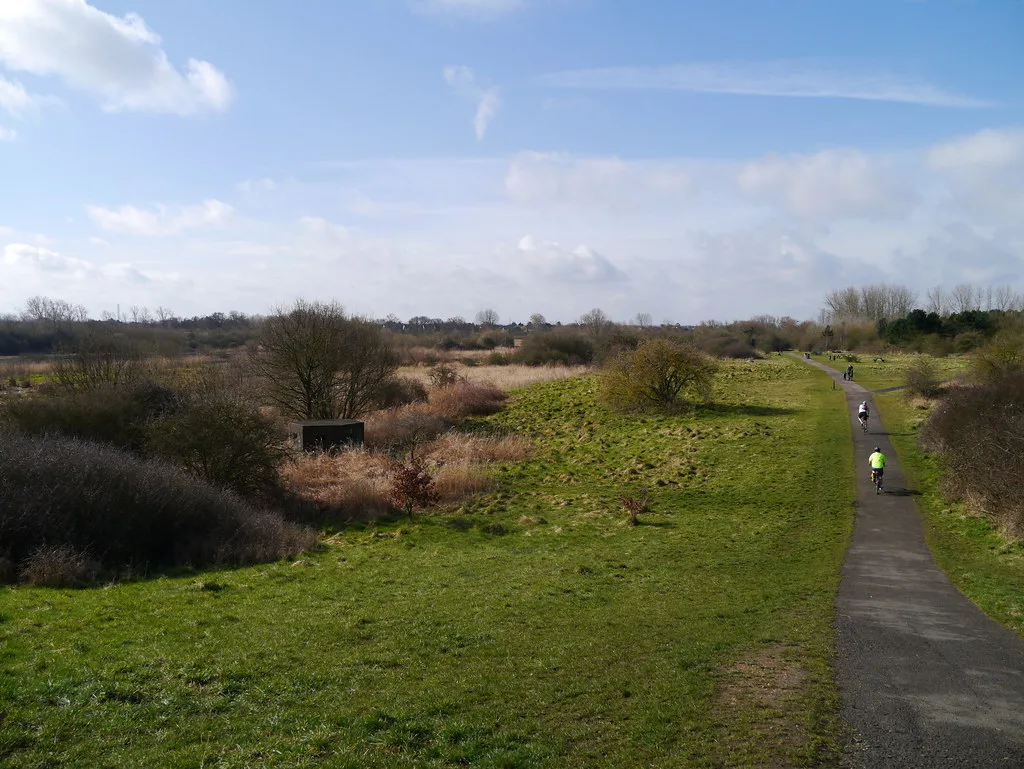

Fourteen fire engines and about 90 firefighters fought the 14 August blaze. Havering has recorded more grass fires than any other London borough.
Fourteen fire engines and around 90 firefighters were sent to a grass fire in Hornchurch Country Park on Friday 14 August. London Fire Brigade took the first of 20 calls at 15:16 and had the fire under control by 17:31, with crews staying into the evening to damp down. There were multiple seats of fire. Engines came from Romford, Ilford, Hornchurch and surrounding stations (London Fire Brigade incident record).
It was the latest in a summer that has made Havering the worst borough in London for grass fires.
Havering leads London, by a distance
On 29 July the brigade had its busiest 24 hours of 2026. Control officers answered more than 1,300 emergency calls and crews attended more than 500 incidents. Of those calls, 218 were to grass fires, and firefighters went to 63 separate grass fires across London in a single day.
In the same statement the brigade wrote: “Havering recorded the highest number of grass fires, with 47 incidents, followed by Barking and Dagenham, which saw 16.” The sentence follows the brigade’s note that control officers had taken almost 1,000 grass fire calls over the previous week, and it does not say explicitly which of those two periods the 47 covers. We have reported it as published (London Fire Brigade, 29 July 2026).
What is not ambiguous is where the big fires were. Of the fourteen notable incidents the brigade listed from that day, nine were in this borough:
- Rainham: 15 fire engines and around 100 firefighters, with about four hectares of grassland alight
- Ingrebourne Hill, Rainham: two separate grass fires damaging nearly five hectares
- London Road, Romford: around four hectares damaged
- Eastern Avenue, Romford: 8 fire engines and around 60 firefighters
- Southern Way, Romford: 8 fire engines and around 60 firefighters, around four acres damaged
- Hornchurch: around two hectares damaged
- Hornchurch: a separate fire involving rear gardens, 6 fire engines and around 40 firefighters
- Hornchurch Country Park: firefighters in attendance, no area given
- Romford: an outbuilding fire, 6 fire engines and around 40 firefighters
What the brigade is asking people to do
Assistant Commissioner Andy Pennick said the brigade had been “fully prepared to respond”, but that “the public has an important role to play in preventing fires from starting in the first place”.
“In these hot, dry conditions, grass fires can spread incredibly quickly, threatening homes, wildlife and the environment, while tying up vital emergency resources,” he said. “With so many of London’s parks and open spaces close to homes and communities, we’re asking everyone to take extra care.”
The specific asks are narrow and practical:
- do not use disposable barbecues in parks or open spaces
- dispose of cigarettes properly
- take litter home if the bins are full, glass in sunlight can start a fire
- at home, keep the barbecue well away from fences, sheds and trees
- clear dry vegetation and garden waste from around the house
If you find a fire, the brigade says to get away from the vegetation and smoke, call 999 straight away, be precise about the location, and not to try to tackle it yourself. Fire can smoulder and spread underground.
The council’s side
Havering Council responded to the July fires on 29 July. Council leader Cllr Keith Prince AM said the council was “deeply saddened and concerned by the recent spate of grass fires in the Ingrebourne Valley area”, and that “Protecting our green spaces is a shared responsibility”.
The council says it is working with the London Fire Brigade and the Metropolitan Police to establish the causes, and doing litter clearance, grass cutting and vegetation management on its own land. It says it is also working with private landowners on firebreaks.
The same dry weather is hitting the borough’s water. On 11 August the council said the lake at Langtons Gardens in Hornchurch had dropped to critically low levels, because it “relies entirely on groundwater and surface run-off and does not have a natural water source such as a spring or stream”. Following Environment Agency guidance, contractors are removing the fish so they can be protected (Havering Council, 11 August 2026).
What it means for you
If you use Hornchurch Country Park, Ingrebourne Hill or the Rainham marshes, expect to find burned ground and closed-off sections for the rest of the summer, and expect more fires while the dry weather holds. These are not remote moors. The brigade’s own point is that Havering’s open spaces sit right against housing, which is why a grass fire here pulls 14 engines rather than two. On 29 July the brigade also had a separate fire involving rear gardens in Hornchurch, six engines and around 40 firefighters.
Two things are worth acting on. First, if you are going to a park, leave the disposable barbecue at home: it is the single item the brigade names first every time. Second, if you see smoke, call 999 rather than assuming someone else has, and give a precise location. Twenty people called about the Hornchurch Country Park fire, and 14 engines were sent.
If a fire closes roads near you, our roadworks and travel page carries the live sources, and the council lists disruption on its service disruptions page.
Sources
- London Fire Brigade: grass fire, Hornchurch Country Park, 14 August 2026 for the engines, firefighters, call times and control time
- London Fire Brigade: urges public to help prevent grass fires after busiest day of 2026, 29 July 2026 for the borough figures, the incident list, the hectares, Andy Pennick’s quotes and the prevention advice
- Havering Council: council responds to recent grass fires, 29 July 2026 for the council’s actions and Cllr Keith Prince’s quotes
- Havering Council: council working to manage drought impact at Langtons lake, 11 August 2026 for the lake levels and the fish removal
Have your say