
Resident doctors at the trust running Queen's Hospital rated their training 75.64%, a six-year high, in the GMC survey. Workload and rotas still need work.
Resident doctors training with the trust that runs Queen’s Hospital in Romford have given their training the highest satisfaction score in six years.
Barking, Havering and Redbridge University Hospitals NHS Trust says its resident doctors scored overall satisfaction at 75.64% in this year’s national training survey from the General Medical Council (GMC), the regulator for doctors. The trust has 415 resident doctors in training.
The survey runs every year. It asks trainee doctors, their supervisors and their tutors across the country about their experience, and it is one of the ways the GMC checks the quality of postgraduate medical education.
Which teams were singled out
NHS England named three of the trust’s training programmes, emergency medicine, geriatric medicine and internal medicine, among those in the country showing the most sustained improvement from 2023 to 2026.
The trust says results were also “extremely positive” in trauma and orthopaedics, core surgery, obstetrics and gynaecology, clinical radiology and anaesthetics. It says they show:
- better teaching and clinical supervision
- more confidence among trainees to raise concerns
- fewer experiences of discriminatory behaviour
According to the trust, it scored well above the national average for:
- overall satisfaction in ITU and critical care
- out-of-hours clinical supervision in clinical radiology
- clinical supervision in paediatrics
The survey also asks supervisors and college tutors. In anaesthesia and critical care, the trust says, their satisfaction scores were among the highest in London.
A question new this year asked whether organisations encouraged shared learning across healthcare professions. At the trust, 83% of trainees agreed.
What still needs work
The trust says the results also show where it has to improve over the coming months: workload, rotas, facilities and reporting systems.
Fiona Wheeler, the trust’s interim chief executive, said:
“It can be daunting to go from being a student to working on our wards and in clinical departments as a resident doctor. It’s important we provide a supportive environment to continue training while caring for our patients.
“I’m delighted many of our resident doctors have told us they’re having a better experience in our hospitals. We’ll also use their feedback to tackle the areas they still find challenging.”
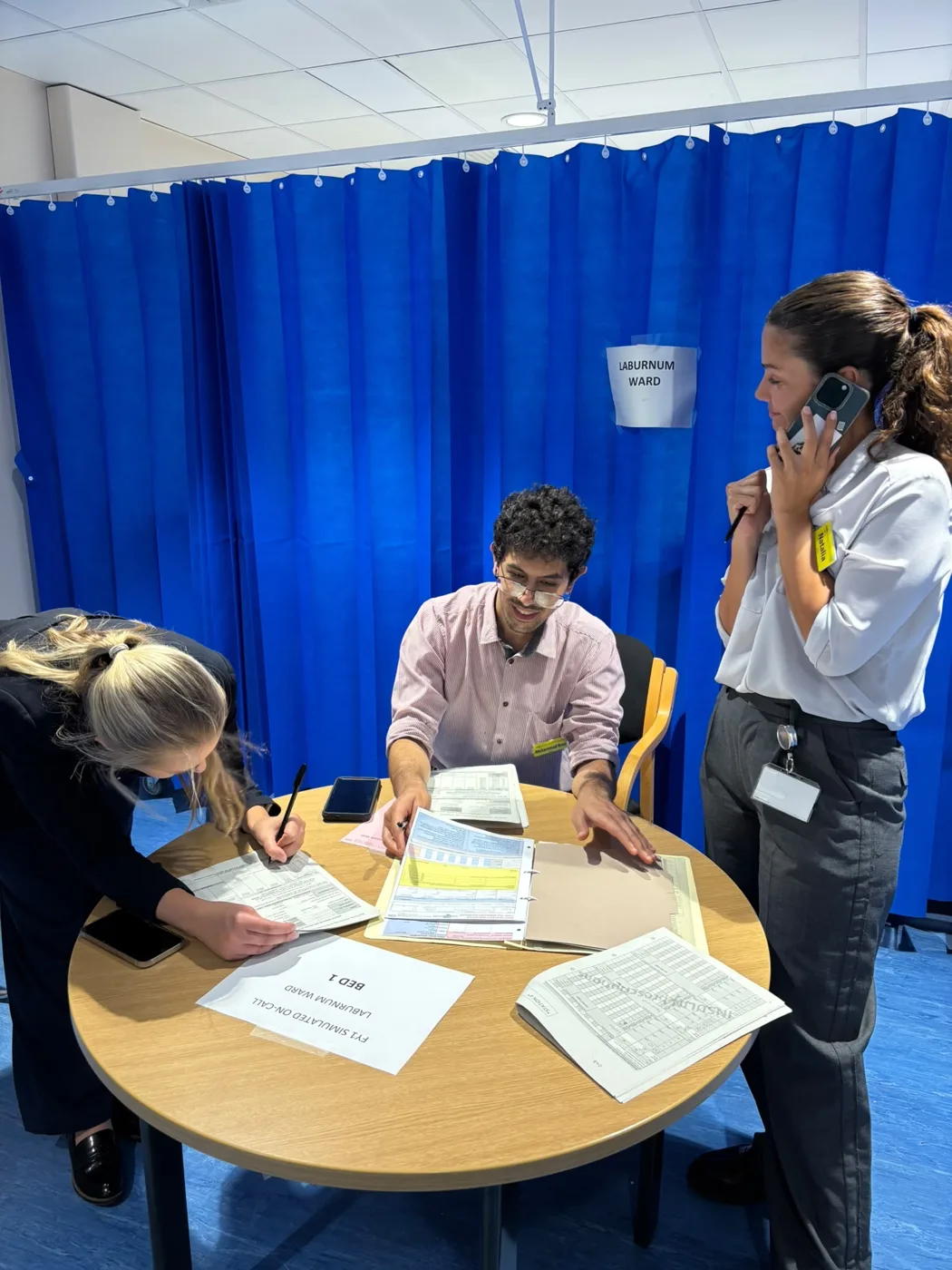
The photograph above, supplied by the trust, shows some of the resident doctors who joined it this year.
The figures are the trust’s own account of its results. The GMC publishes the national survey results for every trust on its website.
Have your say